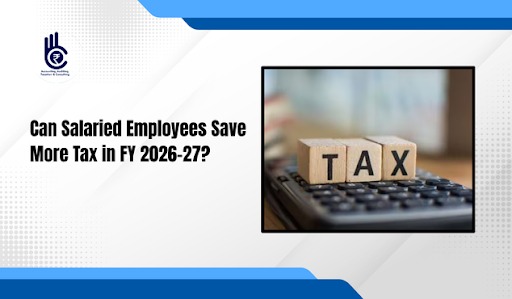
Salaried employees save tax in FY 2026–27 by picking between the old and new tax regimes based on their actual deductions. The new regime offers lower tax slab rates and a higher standard deduction, while the old regime allows housing rent allowance, home loan interest, and section 80C deductions.
Choosing the best option depends on your total investments and yearly salary structure. Calculating total tax liability under both regimes before submitting investment proofs to your employer ensures maximum tax savings every single year.
New Tax Regime Benefits for Salaried Employees
Salaried employees under the new tax regime get a flat standard deduction of ₹75,000 directly from their taxable income. Lower tax slab rates make tax filing super simple without needing big investment proofs.
Employers deduct less tax from monthly salaries when income stays below the tax rebate limits. Many workers save income tax automatically without locking money in long-term tax-saving schemes.
Old Tax Regime Savings for Salaried Employees
Salaried employees using the old tax regime claim major tax deductions through house rent allowance, public provident fund, and life insurance premiums. Total deductions under Section 80C reach up to ₹1,50,000 every financial year.
Home loan interest deductions under Section 24B give an extra ₹2,00,000 tax relief for self-occupied house properties. People with high home loans and big medical insurance policies save more cash in the old system.
Key Tax Saving Options for Salaried Employees
- Section 80C Investments: Save up to ₹1,50,000 using PPF, ELSS mutual funds, EPF, and life insurance plans.
- National Pension System: Get extra ₹50,000 deduction under Section 80CCD 1B over Section 80C limits.
- Health Insurance 80D: Claim ₹25,000 for self and family plus ₹50,000 for senior citizen parents.
- House Rent Allowance: Exempt rent payments from total salary when living in rented homes.
| Tax Saving Component | Old Tax Regime Limit | New Tax Regime Limit | Best Option For |
| Standard Deduction | ₹50,000 | ₹75,000 | Both Regimes |
| Section 80C Deductions | ₹1,50,000 | Nil | High Investors |
| Employer NPS (80CCD 2) | Up to 14% | Up to 14% | All Income Levels |
| Home Loan Interest (24B) | ₹2,00,000 | Nil | Home Owners |
| Section 80D Health | ₹75,000 Max | Nil | Family Insurance |
Smart Salary Restructuring for Salaried Employees
Salaried employees lower taxable income by asking HR teams to include tax-free allowance components inside their yearly CTC packages. Food coupons, phone bill reimbursements, and news magazine allowances reduce gross taxable salary numbers.
Employer contributions to National Pension System under Section 80CCD 2 stay tax-free up to fourteen percent of basic salary in both regimes. Structuring basic salary and allowances smartly cuts income tax without changing net income.
Helpful Tax Allowance Checklist for Salaried Employees
- Food Allowance Vouchers: Save tax on meal cards up to ₹50 per meal during working hours daily.
- Telephone Reimbursements: Claim internet and mobile bills directly against official monthly work expenses.
- LTA Allowance Claims: Take tax-free family travel exemptions twice in a block of four calendar years.
- Employer NPS Contribution: Get direct salary tax cuts when company deposits funds into your pension account.
Income Slab Rates for Salaried Employees
Salaried employees calculate tax liability by checking basic tax slabs under their chosen income tax structure. The new tax regime charges zero tax on taxable income up to ₹3,00,000 with progressive slab rates after that.
Rebates under Section 87A make income up to ₹7,00,000 completely tax-free under the new regime. High earners compare both slab structures before filling investment declaration forms at work.
| Income Slab Range | Old Regime Tax Rate | New Regime Tax Rate | Surcharge Applicable |
| Up to ₹3,00,000 | Nil | Nil | No |
| ₹3,00,001 to ₹6,00,000 | 5% | 5% | No |
| ₹6,00,001 to ₹9,00,000 | 20% | 10% | No |
| ₹9,00,001 to ₹12,00,000 | 20% | 15% | No |
| ₹12,00,001 to ₹15,00,000 | 30% | 20% | No |
| Above ₹15,00,000 | 30% | 30% | Yes (High Income) |
Important Tax Filing Steps for Salaried Employees
Salaried employees collect Form 16 from employers every June to verify income details and tax deductions at source. Matching TDS numbers on Form 26AS and Annual Information Statement prevents tax notice delays.
Filing income tax returns before July 31 avoids late filing fees and penalty interest. Submitting rent receipts and medical bills on time keeps tax calculations correct across financial quarters.
Smart Tax Filing Tips for Salaried Employees
- Check Form 26AS: Verify TDS deducted by employer matches online tax credit records exactly.
- Review AIS Portal: Inspect interest income from savings accounts and fixed deposits before filing.
- Submit Proofs Early: Hand over rent agreements and investment bills to HR before final cutoffs.
- Claim Savings Interest: Use Section 80TTA to claim up to ₹10,000 savings interest deductions in old regime.
Final Thoughts
Salaried employees save maximum tax by comparing both tax regimes carefully before choosing one. Simple investment planning keeps your hard-earned money completely safe and secure every single year.
Getting professional advice helps working people calculate income tax and pick the best tax saving options easily. Planning salary components on time ensures smooth filing and maximum financial peace.
Follow us on Instagram for more helpful legal tips and updates!
Click here to get the best service for your tax needs or Income tax Return, and track your Income Tax Refund easily.
FAQs
1. What is the standard deduction for salaried employees in FY 2026–27?
The standard deduction is ₹75,000 in the new tax regime and ₹50,000 in the old tax regime.
2. Can workers switch between old and new tax regimes every year?
Yes, people earning regular salary income switch between both regimes every year while filing returns.
3. Is NPS tax deduction available under the new tax regime?
Yes, employer contributions to NPS under Section 80CCD 2 remain fully tax-free in the new regime.
4. How much income is tax-free in the new regime?
Income up to ₹7,00,000 stays completely tax-free after applying tax rebates under Section 87A.
5. Where can working professionals get expert help to plan income tax easily?
Working professionals get full tax planning support from certified tax experts by calling Call 📞 7738638500 today!